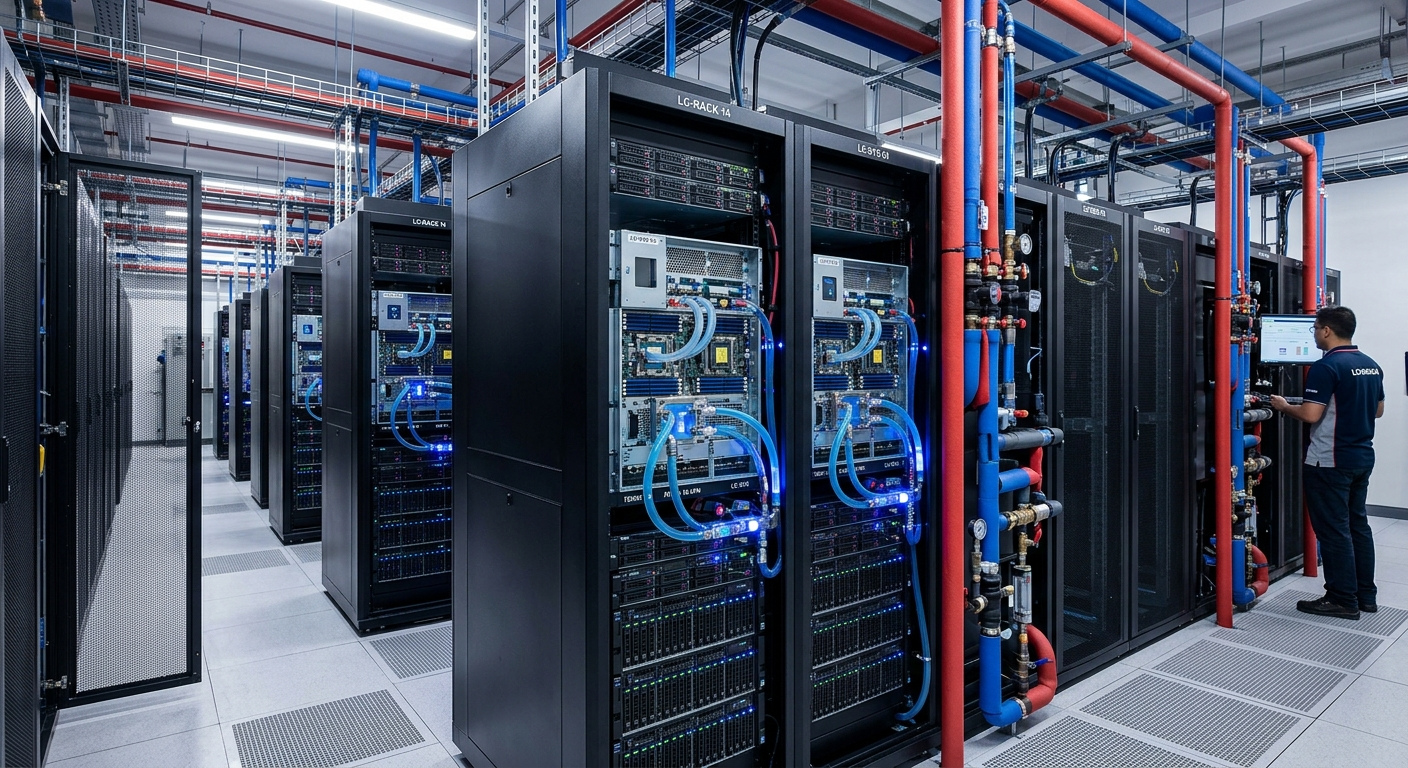
Hyperscale data centres consume water at a scale that few other industrial facilities can match. A single large campus can draw millions of litres per day to keep server halls within safe operating temperatures, and that demand continues to grow alongside the compute capacity behind it. As operators expand into new regions, water treatment has moved from a background utility function to a core part of facility engineering, shaping everything from site selection to long-term operating cost.
Cooling system design and water treatment strategy are no longer separate conversations. The two need to be planned together from the earliest stages of a project, because the choice of cooling method determines the water quality demands the treatment system must meet, and those demands shape the reliability of the entire facility.
Why Cooling Drives Water Treatment Requirements
Data centres rely on a handful of established cooling approaches, each placing different demands on water treatment. Evaporative cooling towers are efficient but consume water continuously and concentrate dissolved solids as water evaporates, which raises scaling and fouling risk over time. Chilled water loops operate as closed systems, reducing consumption but requiring tighter control over corrosion and microbial growth within a sealed environment. Adiabatic systems sit between the two, using water intermittently to supplement air cooling during peak thermal loads.
The scale involved changes the risk profile substantially. A cooling tower fouling issue at a modest commercial facility is an inconvenience. At hyperscale, the same issue can affect thermal performance across an entire server hall, with downtime costs that make preventative water treatment a commercial priority rather than a maintenance line item.
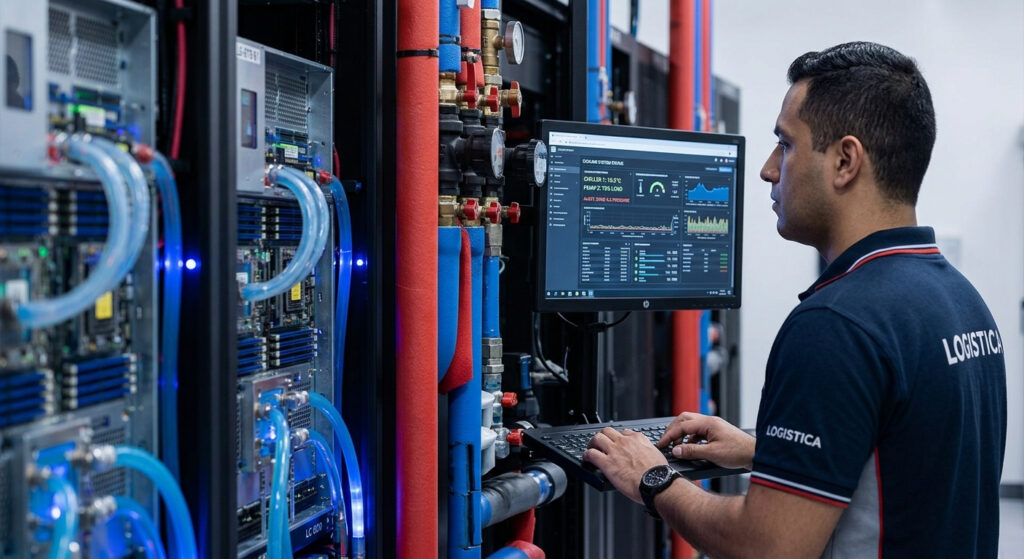
Key Water Quality Challenges in Data Centre Cooling
Several water quality issues recur across hyperscale cooling systems, regardless of which cooling method is in use.
Scaling and mineral fouling develop when dissolved minerals, particularly calcium and magnesium, precipitate out of solution as water evaporates or heats. Left unmanaged, scale reduces heat exchanger efficiency and increases energy consumption to maintain target temperatures.
Microbial growth presents a separate and more serious risk. Cooling towers create warm, moist conditions that favour bacterial growth, including Legionella, which carries direct health and regulatory consequences if not controlled through biocide dosing and regular monitoring.
Corrosion management matters most in closed-loop chilled water systems, where dissolved oxygen and chemical imbalance can degrade piping and equipment over years of continuous operation. Silica and hardness control are particularly relevant to evaporative systems, where these constituents concentrate as cycles of concentration increase and can form hard, difficult-to-remove deposits on heat transfer surfaces.
Treatment Technologies Suited to Hyperscale Applications
Meeting these challenges at scale calls for treatment infrastructure built for continuous, high-volume operation rather than intermittent commercial use.
Reverse osmosis, paired with appropriate pre-treatment, remains the standard approach for producing consistent makeup water quality, particularly where source water carries variable mineral content. Chemical dosing programmes for scale inhibition and corrosion control need to be calibrated to the specific chemistry of each site rather than applied as a generic solution, since source water quality varies considerably between locations.
Filtration and softening reduce the mineral load entering the system before it reaches heat exchange surfaces, easing pressure on downstream treatment steps. Increasingly, real-time monitoring and automation are being built into treatment systems from the outset, allowing operators to track water quality continuously and adjust dosing or filtration in response rather than relying on periodic manual testing.
Applying Industrial Water Reuse Principles to Data Centre Cooling: ABCO Water Treatment and Reuse
Water reuse is not a new discipline. Industries operating in remote or arid regions have spent decades refining closed-loop treatment and reclamation strategies out of necessity, where municipal supply is limited and downtime is not an option. Specialist water treatment providers such as ABCO Water have built their practice around these conditions. With over 50 years of experience originating in Western Australia’s mining and resources sector, the company has spent decades designing treatment systems for sites where water scarcity and remote logistics leave little room for error. That background covers the full lifecycle of a treatment system, from site audits and design through to installation, commissioning and ongoing maintenance, giving them visibility into how treatment infrastructure performs over years of continuous industrial use rather than at a single point in time.
Their capabilities span reverse osmosis, demineralisation, filtration, disinfection and dosing, alongside dedicated water reuse and recycling services aimed at reducing both water usage and operating costs. This combination reflects the same requirements that hyperscale cooling systems face: recovering and reusing process water while managing scale, corrosion and microbial risk in demanding operating environments.
The parallel to hyperscale data centre cooling is direct. Both contexts demand high-reliability treatment infrastructure, tight water quality tolerances and a design philosophy built around minimising dependence on external supply. As data centre operators face growing pressure to reduce freshwater draw, particularly in water-stressed regions, the closed-loop and reclamation approaches already proven in industrial settings offer a practical template rather than a theoretical one.
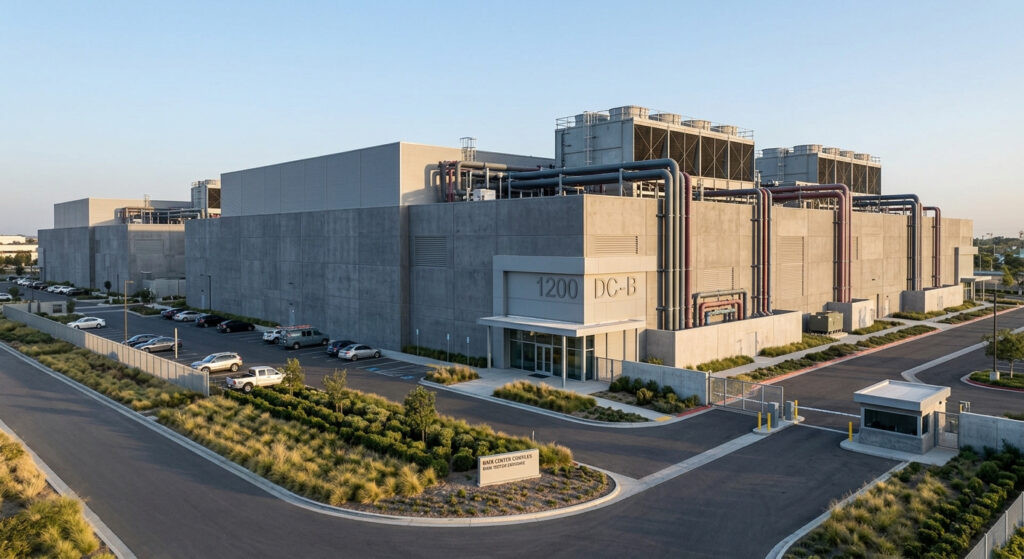
Design Considerations for Site Planning
Water treatment strategy needs to be considered alongside site selection, not after it. Assessing the available water source, whether municipal supply, bore water or reclaimed water, early in the planning process determines what pre-treatment infrastructure will be required and how much capacity needs to be built in from the start.
Redundancy is another design consideration that carries more weight at hyperscale than in smaller facilities. Treatment infrastructure failure that would be a minor issue elsewhere can cascade into a cooling capacity problem across an entire facility, so failover capacity within the treatment system is treated as core infrastructure rather than an optional extra.
Capital cost decisions also need to account for long-term water efficiency gains rather than upfront expense alone. Systems designed for higher reuse rates or lower makeup water consumption typically carry a higher initial cost but reduce operating expense and regulatory exposure over the life of the facility.
Looking Ahead
Several trends are shaping how water treatment systems for hyperscale cooling will be designed in coming years. AI-driven water monitoring is moving from pilot programmes into standard practice, allowing operators to predict fouling and scaling issues before they affect performance rather than responding after the fact. ESG reporting requirements are tightening in many jurisdictions, pushing water consumption and reuse rates into the same scrutiny previously reserved for energy use.
At the same time, pressure is building on operators to site facilities responsibly in water-stressed regions, which will likely accelerate adoption of the closed-loop and reclamation strategies already proven in other industrial contexts. Water treatment design, once a background consideration in data centre planning, is becoming one of the defining engineering challenges of the sector’s next phase of growth.